
Are Cheap Replacement Windows Worth It in Texas? Risks and Tradeoffs
By Isabella Crum | Nov. 11, 2026 | 17 min. read

Budget replacement windows are not always a bad choice, but lower prices can reflect compromises in materials, installation, or warranty coverage. In Texas, those weaknesses may show up faster because of heat, humidity, hail, and foundation movement. For many long-term homeowners, a well-installed mid-range window offers a practical balance of performance, warranty protection, and price. However, a budget or premium product may be the better value depending on the home, ownership timeline, design requirements, and financial priorities.
If three Texas window contractors quote you $15,000, $21,000, and $50,000 for what appears to be the same project, how are you supposed to know which price is fair? And is the lowest quote a smart way to save money? Or a sign that you may be giving up important product, installation, or warranty protections?
Budget replacement windows are not automatically a bad investment. However, a lower price can reflect differences in frame construction, glass performance, window sizing, installation methods, and warranty coverage. Those differences matter in Texas, where intense heat, humidity, hail, wind-driven rain, and foundation movement can expose weak materials or rushed installation sooner than homeowners expect.
Allied Exteriors has served Texas homeowners since 1988, with teams in Houston, Dallas, and Austin. For this article, we interviewed Chad Ryan, an Allied Exteriors product specialist with 17 years of experience and one of the company’s leading window consultants in the Houston market. Chad has helped homeowners compare window options across a wide range of homes, budgets, and performance needs.
By the end of this article, you will understand where manufacturers and contractors commonly reduce costs, which compromises matter most in Texas, and what questions to ask before accepting a lower-priced quote. You will also learn when a budget window can be a sensible value, and when spending more may help you avoid a costly replacement or repair later.
Hidden Risks at a Glance
| Cost-saving choice | What may happen | What you may notice |
|---|---|---|
| Thin or poorly reinforced frame | Frame racks or sags | Window sticks or will not lock |
| Oversized installation gap | Sealant carries more of the load | Drafts, staining, or water intrusion |
Why Do Cheap Replacement Windows Look So Attractive to Homeowners?
The obvious answer is simple: homeowners want to save money.
Window replacement is a very significant household investment. For many families, choosing a lower-priced option is not about chasing the cheapest product; it is about making a necessary project fit within a real-world budget. Plus, saving several thousand dollars upfront can feel like an easy decision.
There’s also a common message repeated throughout the industry:
“All vinyl windows are basically the same.”
Unfortunately, that statement is about as accurate as saying all cars are the same because they all have four tires.
At the opposite end of the spectrum, some companies claim that all vinyl windows are terrible and that homeowners must buy premium composite or fiberglass products.
The truth usually falls somewhere in the middle.
Most people wouldn’t intentionally buy the cheapest vehicle they could find without researching reliability, safety, or expected lifespan. Yet when it comes to windows, many homeowners assume that cheaper simply means “less fancy.”
In reality, lower-priced windows often achieve those savings by reducing material quality, installation time, warranty coverage, or all three.
What Counts as a “Budget” Window?
There isn’t an official industry definition.
However, in today’s Texas replacement market, windows installed typically for less than roughly $1,000 per window often fall into the budget category.
That doesn’t automatically make them bad windows.
It does mean homeowners should ask more questions about:
- Frame construction
- Glass package
- Warranty coverage
- Installation methods
- Manufacturer reputation
In reality, lower-priced windows often achieve those savings by reducing material quality, installation time, warranty coverage, or all three.
What Window Features Are Commonly Removed to Lower Costs?
There are surprisingly many ways manufacturers and contractors can reduce costs.
Some of the most common include:
- Using recycled vinyl instead of virgin vinyl
- Using thinner vinyl frame extrusions
- Using lower-grade glass packages
- Skipping argon gas fills
- Using cheaper weatherstripping
- Using painted finishes instead of laminated finishes
- Installing stock sizes instead of custom-sized windows
- Using lower-cost labor and installation methods
Individually, none of these decisions automatically creates a bad window.
When several of them are combined, however, the result can be a product that struggles in Texas conditions.
A budget window is not defined by one missing feature. The lower price usually comes from several smaller choices made across the product, installation, and warranty.
Why Is Installation Often the Biggest Risk With Budget Windows?
This may be the single most important takeaway from the entire conversation.
Some low-cost installers use stock-sized windows and simply make them fit the opening with filler trim and large amounts of caulk.
Instead of creating a tight, properly measured fit, the installer fills the gaps afterward.
That kind of installation is especially risky in Houston, where rain often arrives sideways and humidity gives trapped moisture fewer opportunities to dry out.
A small gap hidden behind exterior trim may not look serious on installation day. But once wind-driven rain reaches that opening, water can move behind the frame and into the surrounding wall materials.
By the time a homeowner notices staining, soft trim, or a musty smell, the problem may have been developing for months.
This is why Houston homeowners should ask contractors to explain exactly how the window will be measured, sealed, and tied into the existing exterior.
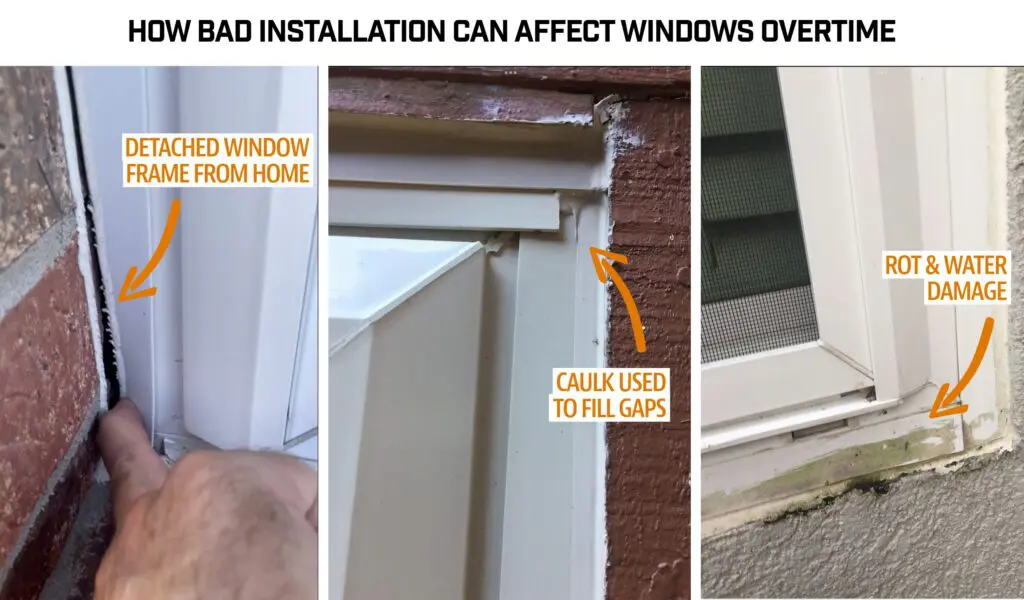
A poor installation can lead to:
- Drafts
- Water infiltration
- Mold growth
- Caulk failure
- Reduced energy efficiency
- Voided manufacturer warranties
In some cases, homeowners can literally fit a finger between the frame and surrounding materials after the trim is removed.
At that point, the quality of the window itself almost becomes irrelevant because the installation is the failure point.
Why Can Budget Windows Struggle in Texas Conditions?
Texas weather is tough across the board for windows, but the risk looks a little different depending on where you live.
| Texas market | Common window stressors | What may show up in a budget window |
|---|---|---|
| Houston | Humidity, wind-driven rain, hurricanes and moisture | Caulk failure, water intrusion, mildew and damaged trim |
| Dallas-Fort Worth | Hail, wind and rapid temperature swings | Seal failure, cracked glass, frame movement and poor operation |
| Austin | Heat, UV exposure and shifting clay soil | Warping, fading, misaligned locks and frames that rack |
The climate may change from one market to another, but the common theme is the same: Texas has a way of exposing weak materials and rushed installation methods quickly.
Your windows may experience:
- 100+ degree summer temperatures
- Extreme UV exposure
- Humidity
- Wind-driven rain
- Hail
- Large temperature swings
- Foundation movement
Many lower-cost windows simply weren’t designed with those conditions in mind.
How Does Texas Heat Affect Lower-End Windows?
Cheaper vinyl frames are often thinner and may use recycled materials that are more susceptible to expansion and contraction from extreme Texas heat.
Over time this can cause:
- Sagging meeting rails
- Warped frames
- Difficult operation
- Broken locks
- Seal failures
- Drafts
In Dallas-Fort Worth, the concern is not only prolonged summer heat.
North Texas can move from triple-digit temperatures to a sharp cold front in a relatively short period of time. That repeated heating and cooling causes window materials to expand and contract.
A stronger frame is better equipped to handle those cycles. A thin or poorly reinforced frame may begin to sag, rack, or pull out of alignment.
Add hail and strong wind to the equation, and a window that was already built to a lower standard may start showing problems sooner than the homeowner expected.
Some contractors describe seeing these issues appear within the first one to two years of installation in Texas climates.
Why Does Foundation Movement Matter So Much in Texas?
Texas homes move more than many homeowners realize.
Across Houston, Dallas-Fort Worth, and Central Texas, expansive clay soils swell when they absorb moisture and shrink as they dry out. That repeated wet-and-dry cycle can cause small changes in the foundation and, in turn, the shape of your window openings.
Drainage around the home can make that issue worse. Many Texas homes have limited gutter coverage or no gutters at all, because it is not required to install by homebuilders. This means heavy rain can fall from the roof and saturate the soil directly around the foundation. Then, during a long dry stretch, that same soil can contract again. The more uneven the moisture is around the house, the more opportunity there is for movement.
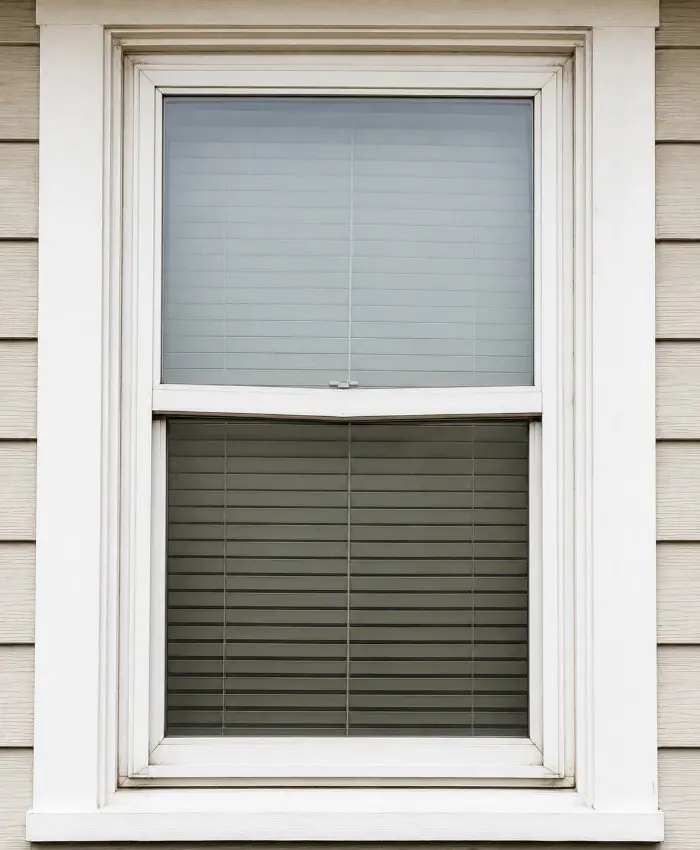
Your windows feel that movement too. A stronger, reinforced frame can usually tolerate minor changes without affecting how the window operates. Thinner, lower-end frames are more likely to rack, fall out of alignment, or become difficult to open, close, and lock.
That is why many Texas window contractors prioritize thicker vinyl extrusions or reinforced frames, even for homes without a known history of foundation problems.
Can Budget Windows Make Your Home Less Comfortable?
Sometimes homeowners replace old windows expecting dramatic comfort improvements and are disappointed when rooms still feel hot or drafty.
Often this comes down to the glass package and weather seals.
Higher-quality replacement windows frequently include:
- Low-E glass coatings
- Argon gas fills
- Closed-cell foam seals
- Improved weatherstripping
- Better design pressure ratings
Budget windows may omit some or all of these features.
The result can be:
- Hot spots near windows
- Drafts
- Increased outside noise
- Dust infiltration
- Less consistent indoor temperatures
A new window should feel like an upgrade but unfortunately, not every replacement window performs like one. In some cases, your old window might have been better to keep than replace with the budget option.
Are Low-E Glass and Argon Gas Actually Worth Paying For?
For Texas homeowners, usually yes.
Low-E coatings help reflect radiant heat away from the home while still allowing natural light to enter. Argon gas improves insulation performance between panes of glass.
Many budget windows include Low-E coatings but skip argon gas entirely because it reduces manufacturing costs and removes future seal warranty concerns for the manufacturer.
For Texas climates, these upgrades generally provide some of the best returns on investment available in replacement windows.
What Warranty Limitations Are Common With Budget Windows?
Many budget windows advertise “lifetime warranties.”
The problem is that lifetime warranty doesn’t always mean what homeowners assume it means. A lot of time, “lifetime” does not mean you lifetime or even the lifetime of the home, it means the lifetime of the window itself.
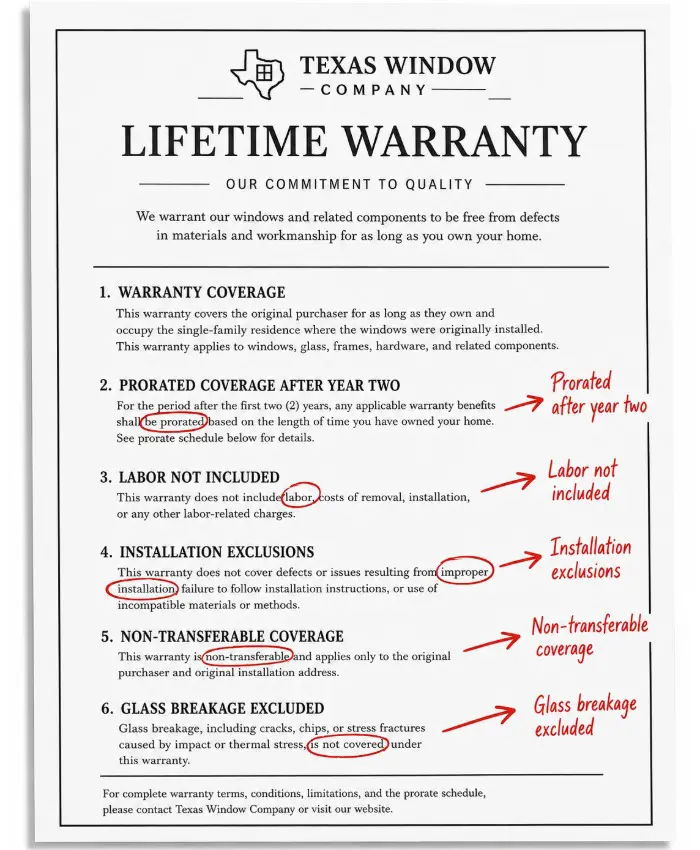
Common limitations include:
- Prorated coverage
- Short seal failure coverage
- Labor exclusions
- Non-transferable warranties
- Installation exclusions
- Climate-related exclusions
Some manufacturers cover the glass but not labor. Others cover seal failures only for a few years.
Some warranties become void if installation methods don’t meet manufacturer requirements.
What Questions Should You Ask Before Choosing a Budget Window?
If you’re comparing quotes, ask each contractor the same questions:
About the Window
| Ask This | Why It Matters |
|---|---|
| Is this a true replacement window or a modified new-construction window? | Replacement windows are designed specifically to fit into an existing opening. Some lower-cost projects use new-construction windows with the nailing fins removed, which is not the same thing. |
| Is the frame made from virgin vinyl or recycled vinyl? | The quality of the vinyl can affect how well the frame holds its shape over time, especially through repeated Texas heat cycles. |
| Is it custom measured or stock sized? | A stock-sized window may require larger gaps around the frame to make it fit the opening. Those gaps then have to be filled, insulated, and sealed correctly. |
| Does it include Low-E glass? | Low-E coatings help reduce the amount of radiant heat passing through the glass, which is especially important in Texas. |
| Does it include argon gas? | Argon gas between the panes can improve the insulating performance of the glass unit. Some lower-cost windows leave it out to reduce cost. |
There is not always one perfect answer to these questions. What matters most is whether the contractor can clearly explain their installation method and why it is appropriate for your home. Vague answers like “that’s just how we do it” should give you a reason to ask more questions.
About Installation
| Ask This | Why It Matters |
|---|---|
| How will you seal the opening? | The seal around the window helps keep out air and water. If the contractor relies mainly on trim and caulk to close large gaps, those materials can become the weak point later. |
| Will filler trim be used? | Filler trim is not automatically a problem, but large amounts of it can be a sign that the window is smaller than the opening and the installer is making up the difference afterward. |
| How much installation tolerance will be left around the frame? | A window needs some room for proper fitting and adjustment, but too much space can create a larger area that has to be filled and sealed. |
| What type of caulk and sealants do you use? | Texas heat, humidity, and temperature swings are tough on exterior sealants. Lower-quality caulk can shrink, crack, or deteriorate quickly. |
You do not need to become a window engineer to compare products. The goal is simply to make sure the contractor can clearly explain what is actually being installed in your home and why it is appropriate for Texas conditions.
About the Warranty
| Ask This | Why It Matters |
|---|---|
| Is labor covered? | A manufacturer may provide a replacement part or glass unit while leaving you responsible for the cost of removing and reinstalling it. |
| Is glass breakage covered? | A warranty may cover a failed glass seal but not a pane that cracks from an accidental impact. Those are two very different types of coverage. |
| Is seal failure prorated? | Some “lifetime” warranties provide full coverage only for the first few years and then reduce what the manufacturer will pay as the window gets older. |
| Is the warranty transferable? | Transferable coverage can matter if you sell the home because the next owner may be able to keep some or all of the warranty protection. |
| Can I see a copy of the warranty before purchasing? | Warranty headlines like “lifetime” do not tell you what is excluded, prorated, or limited. The actual document does. |
If a contractor talks extensively about the warranty but will not let you read it before purchasing, that should give you a reason to slow down. You can also review the product warranties Allied provides online before making a decision.
When Might a Budget Window Be the Right Decision?
A lower-priced window may be entirely reasonable if you are preparing to sell soon, improving a rental property, or trying to solve a specific problem without investing in upgrades you will not use.
In some cases, replacement may not be necessary at all. A hardware adjustment, new weatherstripping, glass repair, or targeted sealing may solve the problem for less. A trustworthy contractor should be willing to explain those options before recommending a full replacement.
Which Window Price Range Is the Best Fit for You?
When window quotes are far apart, it can feel like you have to choose between the cheapest option and the most expensive one. But neither price automatically tells you which window is the best value.
For many homeowners, the best fit is somewhere in the middle: a solid window, installed properly, with a warranty you can actually rely on.
| Window option | Usually best for |
|---|---|
| Budget window | Simple openings, basic white windows, short-term ownership, flips, secondary structures, or strict budgets |
| Mid-range window | Most long-term homeowners seeking dependable performance, better efficiency, professional installation, and a solid warranty |
| Premium window | Higher-value or historic homes, specialty colors and shapes, impact-rated needs, stronger warranties, or higher-end architectural finishes |
The window should match the home’s opening, architecture, performance needs, and expected ownership period. Paying for features that do not serve those needs is not better value, regardless of the home’s price.
Spending more is usually worthwhile when you plan to stay in the home, want stronger warranty protection, need specialty options, or own a home where the cheapest window would look or perform out of place. That does not mean you need the most expensive product.
Are Budget Windows the Right Choice for Your Texas Home?
Budget replacement windows are not automatically a bad investment. Some lower-priced options can perform well when they are properly sized, professionally installed, and supported by a dependable warranty.
The real risk comes when a low quote hides compromises in the frame, glass package, installation process, or warranty coverage. In Texas, intense heat, humidity, hail, wind-driven rain, and foundation movement can expose those weaknesses sooner than homeowners expect.
Now that you know what can drive window prices down, your next step is to compare each quote beyond the final number. Ask every contractor what window they are installing, how it will be sized and sealed, what performance ratings it carries, and exactly what the warranty covers. Getting those answers in writing will help you determine whether a lower price represents genuine value or costly shortcuts.
At Allied Exteriors, our job is not to convince every homeowner to buy the most expensive window or to replace windows that still have useful life left. Our job is to help you understand what you are being offered, what you are giving up at each price level, and which option makes the most sense for your home.
Sometimes that will be a premium product. Sometimes it will be a straightforward mid-range window. In some situations, an affordable option, a repair, or waiting may be the wiser decision. We will tell you what we believe, explain why, and let you decide without pricing games or pressure.
To continue your research, read What Window Features Are Actually Worth Paying For? to understand what makes sense to add on, or leave off. When you are ready to discuss your project, book an honest estimate with an Allied Exteriors window specialist.
Frequently Asked Questions About Budget Windows in Texas
Are budget windows always a bad choice?
No. Some affordable windows can perform well when they are properly sized, installed correctly, and backed by a reliable warranty. The bigger concern is when a low price comes from cutting corners on the product, installation, and warranty at the same time.
How long do budget windows usually last in Texas?
There is no single lifespan, but lower-grade windows may begin showing problems sooner in Texas because of heat, UV exposure, wind, humidity, and foundation movement. Issues like cracked caulk, seal failure, sagging frames, or difficult operation can sometimes appear within the first few years.
Is installation more important than the window brand?
In many cases, yes. A decent window installed properly can outperform a better window installed poorly. Custom sizing, proper sealing, quality caulk, and careful preparation of the opening all play a major role in long-term performance.
What should I look for in a budget window warranty?
Ask whether the warranty covers seal failure, glass breakage, hardware, labor, and installation. Also check whether coverage is prorated, transferable, or voided by certain installation methods. Always request a copy of the full warranty before signing.
Is a mid-range window usually the best value?
For many homeowners, yes. A mid-range window often provides a better balance of product quality, energy efficiency, installation, and warranty protection without the added cost of premium upgrades you may not need.
Allied Exteriors Blog
Whether you’re comparing replacement windows, researching siding materials, or trying to understand project costs, our Learning Center is built to help you make informed decisions before talking with a contractor.