
How to Read a Window Replacement Estimate: Every Section Explained
By Ryan Shutt | Sep. 23, 2026 | 13 min. read
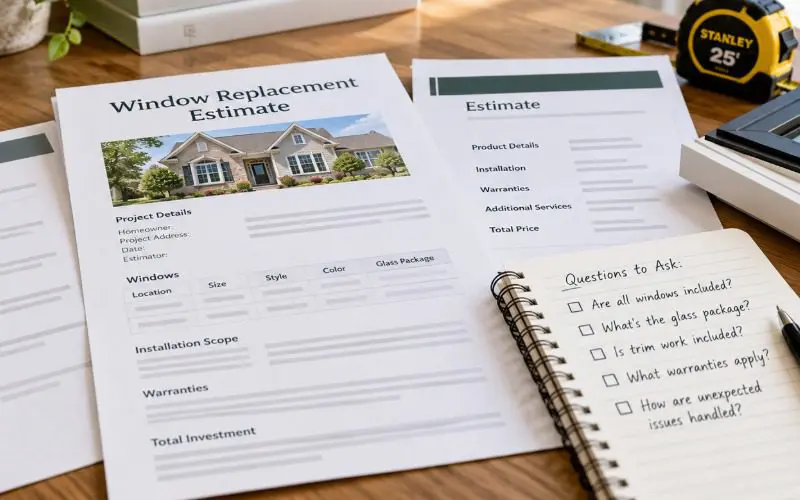
What are you actually paying for when you get a window replacement estimate? And how can you tell whether everything you discussed, like the window style, installation details, warranties, and finishing work, is really included?
To help make sense of it all, we spoke with Ryan Shutt, CEO of Allied Exteriors. Ryan has more than two decades of experience in the Texas home improvement industry and has seen just about every type of window estimate, from one-page quotes to detailed multi-page proposals.
In this article, we’ll break down a typical window replacement estimate section by section, explain what each part means, point out common red flags, and help you know what to ask before you sign.
Executive Summary
A reliable window replacement estimate should identify the exact windows being purchased, the installation work included, the total price, applicable warranties, and how additional work will be handled. Any upgrade or promise discussed during the consultation should also appear in writing before you sign.
Why Is It So Important to Understand Your Window Replacement Estimate?
A window replacement estimate is more than a price quote.
It’s the document that defines exactly what your contractor has agreed to provide.
If something isn’t included, or isn’t clearly described, it can easily become a misunderstanding later.
According to Ryan Shutt, CEO of Allied Exteriors, homeowners should focus less on what a contract excludes and more on making sure everything they’ve been promised is actually written into the estimate.
We encourage homeowners to pause before signing and ask for anything they’ve discussed to be added to the estimate if it isn’t already there.
A complete estimate should answer questions like:
| You should be able to quickly identify… |
| Which windows are being replaced |
| The manufacturer and product series |
| The size, style, color, and glass package for each window |
| What work is included in the installation |
| What warranties apply |
| How unexpected issues, such as hidden water damage, would be handled |
When you understand your estimate, you’re no longer comparing contractors based solely on price. You’re comparing the products, installation, warranties, and overall value behind that number. And that’s ultimately what leads to a better long-term decision.
So, what should you actually expect to see when you open a window replacement estimate? Let’s start with the very first page.
What Information Should Appear at the Top of a Window Replacement Estimate?
There isn’t a universal format for window replacement estimates.
Some companies use a polished digital proposal with supporting documents, while others may provide a single printed page with only a few handwritten notes. In estimates homeowners have shown our team, we have seen everything from comprehensive multi-page contracts to estimates that simply say the price on the back of a business card.
Instead of judging an estimate by its length, focus on whether it clearly answers the basic questions about your project.
At a minimum, the estimate should include:
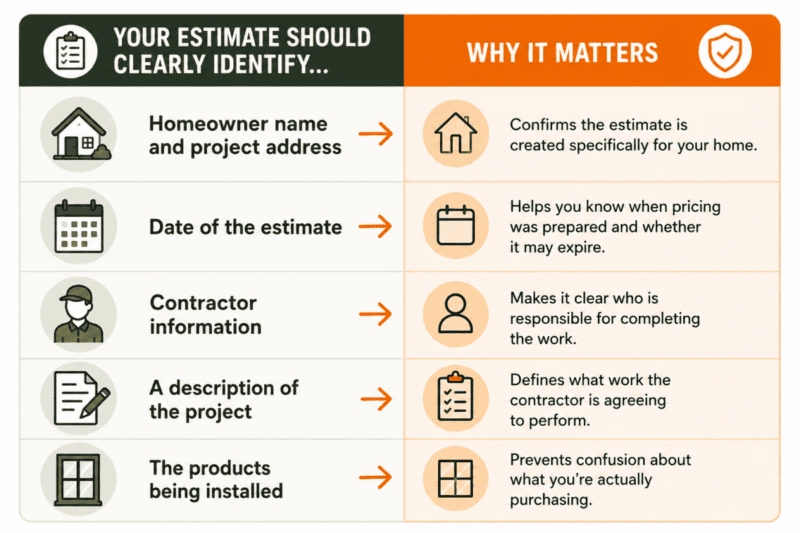
While a simple estimate isn’t automatically a problem, a professional proposal should look organized and intentional. If the paperwork appears rushed, incomplete, or difficult to read, it may raise questions about how much attention to detail the company brings to the rest of the project.
What Should the Scope of Work Section Include?
Once you’ve confirmed the basic project information, the next step is understanding exactly what the contractor is agreeing to do.
This is one of the most important parts of your estimate because it defines the scope of your project.
A good scope of work should clearly answer questions like:
- How many windows are being replaced?
- Which openings are included?
- What type of windows are being installed?
- Are there any upgrades or custom options?
- What work is included beyond installing the windows?
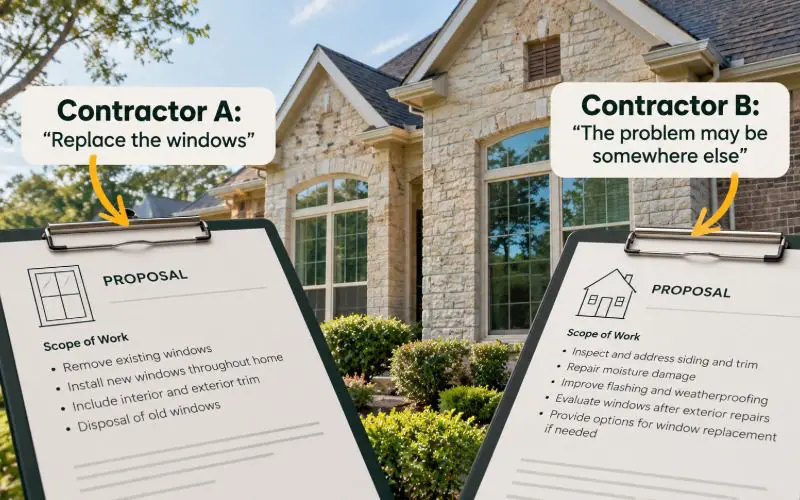
For example, if you’re replacing twelve windows throughout your home, your estimate shouldn’t simply say “12 replacement windows.”
It should identify important product details for each window, such as:
- Window size
- Window style (double-hung, slider, picture window, etc.)
- Interior and exterior color
- Any custom features or options
The more specific the estimate is, the easier it becomes to verify that you’re receiving exactly what you expected.
Start With the Inclusions, Then Review the Exclusions
Instead of worrying about what isn’t included, make sure everything you were promised is clearly listed as included.
Imagine your consultant says they’ll include:
- Upgraded locking hardware
- Interior trim replacement
- Additional exterior finishing
- A specialty installation detail at no additional cost
Even when a sales representative genuinely intends to include something, memories fade and personnel change.
As a general rule:
If it was important enough to discuss during the consultation, it’s important enough to appear somewhere in the written estimate.
What Installation Details Should Be Included in a Window Estimate?
Unlike the product specifications, the installation section of a window estimate usually isn’t extremely detailed.
Most contractors don’t include a step-by-step explanation of how every window will be installed. Instead, those details are often covered during the consultation or sales presentation, where they’ll explain what makes their installation process unique.
Installation is one of the most important parts of the entire project. A high-quality window can only perform as well as installed.
What Should You Ask About During the Consultation?
Because many installation details aren’t spelled out line-by-line in the estimate, homeowners should be prepared to ask questions before signing.
Some good questions include:
- When your installers leave my house, will there be anything else I need to hire someone to finish?
- How will the old windows be removed?
- How will the new windows be sealed against water and air leaks?
- Will flashing be installed where needed?
- What insulation is used around the window?
- Is exterior wrapping or capping included?
- Will the installation meet the manufacturer’s requirements?
- What cleanup is included after installation?
The goal isn’t to memorize every step of the installation process. It’s to understand how your contractor approaches the work and whether they’re willing to explain it clearly.
How Should Pricing Be Presented on a Window Estimate?
Many replacement-window contractors, including Allied, price windows as a complete installed product rather than separating every material and labor cost into individual line items.
For example, the price for one installed window often includes:
- The window itself
- Installation labor
- Fasteners and installation materials
- Sealants and insulation
- Exterior wrapping or finishing
- Cleanup and disposal
- Company overhead
- Warranty support
So instead of seeing ten separate charges, you’ll typically see one installed price for each window or one total project price.
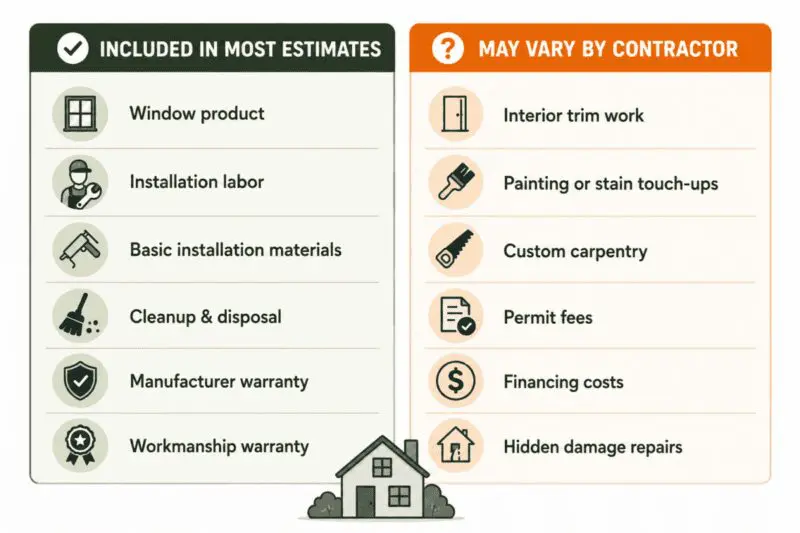
That isn’t necessarily a lack of transparency. It’s simply how most companies structure their pricing.
Does a Higher Price Mean You’re Being Overcharged?
Not necessarily. One of the biggest misconceptions homeowners have is assuming that if two companies are replacing the same number of windows, their prices should be nearly identical.
In reality, there are dozens of factors that affect what you’re paying for.
A higher-priced estimate may include:
- A higher-performing window
- A more experienced installation team
- Longer workmanship coverage
- Better manufacturer warranties
- Additional service staff
- More robust quality control
- A company that’s been around long enough to support future warranty claims
You’re not just buying a window, you’re buying the company standing behind it. Established companies often have higher operating costs because they’re maintaining service departments, honoring warranties, and investing in long-term customer support.
That doesn’t automatically make the more expensive estimate the better value. Likewise, the lowest price isn’t automatically the best deal.
The goal is to understand what’s included behind the number, not just compare the number itself.
What Warranty Information Should Be Included with a Window Replacement Contract?
A warranty only protects you if you understand it before you sign.
After all, if you’re making a significant investment in your home, you deserve to know exactly what protection comes with it.
What Should the Warranty Explain?
A good warranty should answer much more than “How long am I covered?”
Before signing, make sure you understand:
- What components are covered (frame, glass, hardware, screens, etc.)
- How long each part is covered
- What isn’t covered
- Whether labor is included or only replacement parts
- What could void the warranty
- Whether any homeowner maintenance is required
- How to file a warranty claim if something goes wrong
Some warranties are very comprehensive. Others have exclusions that significantly limit what the manufacturer or contractor is responsible for.
The only way to know the difference is to read the document, not just the marketing brochure.
Understand Your Responsibilities as a Homeowner
Some manufacturers require products to be registered after installation. Others require routine maintenance to keep the warranty valid. Missing those requirements could affect your coverage later.
That’s why it’s worth asking your contractor:
“Is there anything I need to do after installation to keep my warranty in effect?”
It’s a simple question that could save you frustration years down the road.
Don’t Be Afraid to Ask for the Full Warranty
If a contractor tells you their windows come with a great warranty, ask to see it.
A reputable company should have no problem providing the complete warranty document before you sign a contract.
Homeowners should expect to receive it as part of the buying process, not have to request it after the installation is complete.
If a company is reluctant to share the warranty or only discusses it in vague terms, that’s a good reason to ask more questions before moving forward.
Warranty Checklist
Before signing your window replacement contract, make sure you can answer “yes” to these questions:
☐ Have I received a copy of the warranty?
☐ Do I understand what’s covered—and what isn’t?
☐ Do I know how long the manufacturer and workmanship warranties last?
☐ Do I know what could void the warranty?
☐ Do I know who to contact if I ever need service?
7 Questions to Ask Before Signing a Window Replacement Contract
Even the best-written estimate won’t answer every question. That’s why it’s important to have a conversation with your contractor before signing.
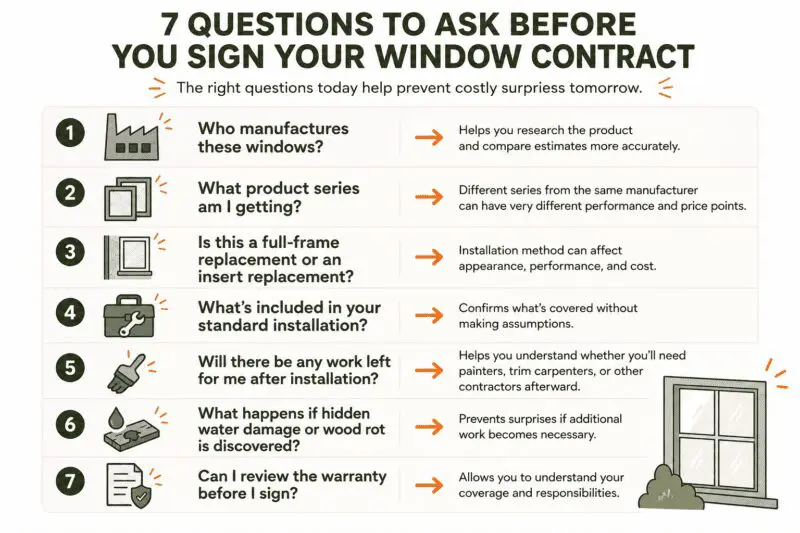
The answers to these questions often tell you more about a contractor than the estimate itself. A company that welcomes your questions and takes the time to explain its process is usually demonstrating the kind of transparency you want throughout your project.
What Are the Biggest Red Flags to Watch for in a Window Replacement Estimate?
Some contractors provide detailed digital proposals with multiple supporting documents, while others use much shorter estimates. The length of the estimate isn’t necessarily what matters.
Instead, pay attention to whether it leaves important questions unanswered.
Here are some of the biggest red flags to watch for.
| Red Flag | Why It Matters | What You Should Do |
| Product isn’t identified | You can’t compare products accurately. | Request the manufacturer, line, model, and glass package. |
| Verbal promises aren’t written down | They may be forgotten later. | Ask to have promises documents and agreed upon by both parties. |
| Contractor won’t leave a copy | You shouldn’t be pressured into signing. | Do not sign until you can review the documents without pressure. |
| Warranty isn’t included | You can’t review the coverage. | Request the full warranty, not a sales summary. |
| Estimate is overly vague | Important details may be missing. | Ask for a revised scope before paying a deposit. |
A good estimate should make you feel more confident about your project, not more confused.
Your Next Step: Don’t Just Compare Prices, Compare What’s Behind Them
Getting a window replacement estimate can feel overwhelming, especially when you’re trying to make sense of product codes, installation details, warranties, and a final price that may look very different from one contractor to the next.
Now, you know what a complete estimate should include, which details need to be clearly written down, and what questions to ask before you agree to anything. The goal isn’t to understand every technical or legal term, it’s to feel confident that you know what you’re buying, what’s included, and how unexpected issues will be handled.
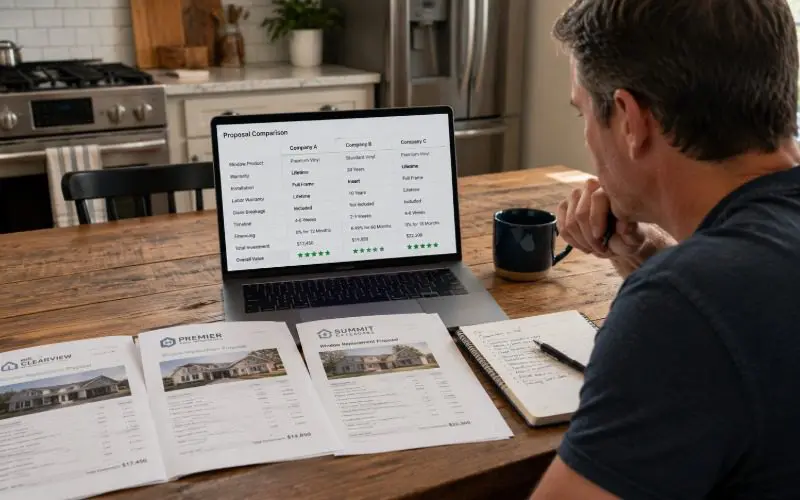
Your next step is to compare your estimates based on more than the total price. Look closely at the windows, installation methods, warranties, and service included in each proposal. Then, read our guide, “What Should Be Included in a Window Replacement Quote?”
FAQs About Window Estimates
How long is a window estimate valid?
There’s no universal expiration date for a window replacement estimate. Some contractors honor their pricing for 6 months, while others may only guarantee it for a week or two. During periods of changing material costs or manufacturer price increases, estimates may expire even sooner.
Your estimate should clearly state whether it has an expiration date. If it doesn’t, ask your contractor how long the quoted price will be honored before you make a decision.
Should a contractor charge for a window estimate?
Most reputable window replacement companies provide estimates at no cost.
A free estimate typically includes a consultation, measurements, product recommendations, and a written proposal. However, some contractors may charge for more specialized services, such as engineering reports, architectural plans, or extensive design work.
If you’re unsure, ask whether the consultation is free and whether there are any fees before scheduling your appointment.
Can the final price exceed the estimate?
It can, but there shouldn’t be any surprises.
The most common reason a project costs more than the original estimate is when hidden conditions, such as water damage or wood rot, aren’t discovered until the old windows are removed.
If that happens, a reputable contractor should explain the issue, document it, discuss your options, and obtain your approval before performing additional work. You shouldn’t reach the end of the project only to discover unexpected charges that were never discussed.
Should every window have its own line item?
Not necessarily. Most window estimates identify each window by its size, style, location, or product specifications, but many contractors price the project as a complete installed system rather than assigning a separate price to every window.
What’s most important isn’t whether each window has an individual price, it’s whether the estimate clearly identifies the products you’re purchasing and what’s included in the installation.
Is an estimate legally binding in Texas?
In many cases, yes.
If you sign a home improvement contract in your home, as opposed to at the contractor’s office, Texas law generally provides a three-business-day right to cancel. During that “cooling-off” period, you can cancel the contract without penalty by following the cancellation instructions provided with your paperwork. Contractors are generally required to notify you of this right and provide a cancellation form.
However, this doesn’t apply to every contract. The three-day right to cancel only applies to certain types of consumer transactions and isn’t a blanket rule for every purchase made in Texas.
Allied Exteriors Blog
Whether you’re comparing replacement windows, researching siding materials, or trying to understand project costs, our Learning Center is built to help you make informed decisions before talking with a contractor.