
How to Tell if a Window Contractor Is Actually Qualified in Texas
By Eric Pope | Sep. 25, 2026 | 22 min. read

Every window contractor says they do quality work. But how can you tell whether their installers are truly experienced, their process is reliable, and their warranty will protect you if something goes wrong?
That question is especially difficult in Texas, where there is no single statewide contractor license or certification that proves a company is qualified to install replacement windows. A business can advertise window installation services without demonstrating years of experience, formal training, or a consistent installation process.
So, what should you look for instead?
A qualified window contractor should be able to show window-specific experience, proper insurance, an established relationship with its installers, a repeatable installation process, clear warranty coverage, and a reliable plan for handling service after the project is complete.
At Allied Exteriors, we install replacement windows for Texas homeowners, so we recognize that we are not an unbiased observer. Our goal is not to convince you that one company is automatically the right choice. Or even to convince you that we’re the right choice. It is to help you ask better questions and recognize the difference between vague marketing claims and evidence of a qualified window operation.
In this article, you will learn how to evaluate a contractor’s experience, installers, insurance, installation process, reviews, warranties, and long-term service before you sign a contract.
Executive Summary
There is no single license, certification, review score, or number of years in business that proves a Texas window contractor is qualified. Instead, look for window-specific experience, proper insurance, trained and accountable installers, a clearly documented installation process, strong product and workmanship warranties, and a reliable service system after installation.
A qualified contractor should be able to explain who will install your windows, how the work will be completed, how problems will be handled, and what evidence supports its claims. The biggest warning sign is vagueness.
Why Do a Window Contractor’s Qualifications Matter So Much?
Most homeowners spend most of their research comparing window brands, frame materials, glass packages, and energy-efficiency ratings.
Those things matter.
But the quality of the installation can make or break nearly every benefit the window is supposed to provide.
A poorly installed window can lead to:
- Air leaks and drafts
- Water intrusion
- Reduced energy efficiency
- Difficulty opening and closing the window
- Pest intrusion around unsealed gaps
- Warranty disputes
- Premature product failure
A high-end window installed incorrectly can perform worse than a modest window installed well.
There is an important catch, though.
Companies selling the cheapest windows are often cutting costs in more than one place. A low-priced product does not automatically mean poor installation, but it is uncommon for a company to save heavily on the window while investing generously in training, labor, quality control, and service.
You are more likely to encounter a good window installed poorly than a poor window installed exceptionally well.
That is why you cannot evaluate the product and installation as two separate decisions. You are buying both.
Is a Business License Enough to Prove a Window Contractor Is Qualified?
Unlike many states, Texas window contractors are not required to hold a statewide contractor license.
That means asking, “Are you licensed?” may not tell you much.
Instead, ask questions that reveal how established the company’s window operation actually is:
- How long have you been installing replacement windows?
- How many window projects do you complete each year?
- What percentage of your business comes from windows?
- Do you have a dedicated window division?
- Who performs the installations?
- Who handles service and warranty claims?
These questions matter because a company may have been in business for decades without having decades of window experience.
A 35-year-old roofing company may have started selling windows last year.
That does not automatically mean it is unqualified. Some roofing, siding, and remodeling companies build excellent window divisions with experienced leadership, dedicated installers, and formal processes.
But homeowners should not confuse years in business with years installing windows. Those are not always the same thing.
Allied is a good example of why homeowners should ask about the history of a company’s individual service lines. We officially began in 1988 as a vinyl window and siding company, so our window division was not created years after the business was established. While our siding products and service areas have changed over time, window replacement has remained a core part of the company.
Does a Roofing Company or General Contractor Automatically Qualify as a Window Expert?
A roofing company can install windows. A siding company can install windows. A general remodeler can install windows.
The company’s primary service is not the deciding factor. The real question is whether it has built a legitimate window operation or simply treats windows as an occasional add-on.
If a company normally installs roofs, who is installing your windows? Is it a dedicated window crew, or is it the same crew that was putting shingles on a roof last week?
That may sound blunt, but it is a fair question.
A qualified multi-service contractor should be able to explain:
- Whether it has a dedicated window department
- How frequently its crews install windows
- How those installers were trained
- Whether the installers regularly work with the product being sold
- What process every crew is expected to follow
This is particularly important in storm-driven markets such as Dallas–Fort Worth, where roofing companies may expand into windows when hail-related work slows down.
Some of those companies may do excellent work. Others may simply find a product, locate an available installer, and figure out the rest after the contract is signed.
You want to know which situation you are dealing with before the project begins.
What Insurance Should Every Window Contractor Carry?
Insurance is one of the few qualifications a homeowner can verify relatively easily.
A window contractor should be able to provide documentation showing that it carries appropriate coverage, including general liability insurance and coverage for workers (workers’ compensation) performing the installation.
Every contractor working on your home should carry:
| Coverage Type | Why It Matters |
| General Liability Insurance | Protects your home if damage occurs during the project |
| Workers Compensation Coverage | Protects you if someone is injured on your property |
| Commercial Auto Insurance | Covers company vehicles involved in the project |
Why does this matter?
Because if a worker is seriously injured on your property and the contractor does not have appropriate coverage, the situation can become much more complicated for the homeowner.
Without appropriate coverage, a homeowner could face added legal and financial exposure if a worker is injured on the property.
You should not have to accept a verbal promise that a company is insured.
Ask to see the documentation.
A reputable contractor should have it readily available. Some companies include proof of insurance directly in their contract or proposal materials.
If providing insurance documentation seems unusually difficult, that is a reasonable reason to pause.
How Long Should a Window Contractor Have Been in Business?
There is no perfect number of years that guarantees a company is qualified. A newer company can have experienced leadership, strong crews, and an excellent process. A decades-old company can still deliver poor service.
However, longevity matters because replacement windows are a long-term purchase.
A company that has been installing windows for 20+ years is much more likely to be around when you need warranty service in year 12 than a company that opened six months ago.
However, there’s an important distinction many homeowners miss:
A company may have been in business for 30 years without installing windows for 30 years.
Years in Business and Years Installing Windows Are Not Always the Same
Allied’s own Director of Sales, Eric Pope, has seen this firsthand and shared an important example from his own career. He helped a long-established roofing company build a legitimate window division with quality products and a dedicated installer. The division was not shut down because the installations were bad. The owner simply decided to move the company’s marketing and resources into solar instead.
The roofing company remained in business, but the window customers lost the support system they expected.
| Company History | Window Experience |
| 30 years in roofing | 2 years installing windows |
| 15 years in remodeling | 12 years installing windows |
| 8 years in business | 8 years focused on windows |
That is why the better question is not only:
How long has your company been operating?
It is also:
How long have you been committed to installing and servicing windows?
Does Manufacturer Certification Actually Matter?
“Factory trained and certified” sounds reassuring.
But homeowners should ask a simple follow-up:
Certified by whom?
Many window manufacturers do not require contractors to complete a formal annual certification program before installing their products.
In some cases, “trained” may mean a new installer worked alongside an experienced crew member for a few weeks. In other cases, it may refer to legitimate product-specific instruction.
The phrase alone does not tell you which one applies.
That means:
- Factory trained
- Certified installer
- Manufacturer approved
can sometimes mean very different things from one company to another.
Instead of focusing on certifications, ask questions like:
- How are installers trained?
- Is there a documented installation process?
- Are crews audited or inspected?
- How long has the installation team worked with the company?
A repeatable process often matters more than a marketing badge.
What Experience Should a Qualified Window Contractor Have?
Years of experience can be valuable, but experience by itself does not guarantee good work.
An installer with five years of experience following a proven process can sometimes outperform an installer with twenty years of experience who refuses to adapt or learn new methods.
As Allied’s Director of Sales Eric Pope puts it, he would rather work with a newer installer who follows the company’s process than an experienced installer who is unwilling to change outdated habits.
That is why homeowners should ask both sets of questions.
Questions about experience
- How long has the lead installer been installing windows?
- How many window projects does this crew complete each year?
- Has the crew installed this particular product before?
- How long has this crew worked with your company?
Questions about training and consistency
- How do you train new installers?
- Does every crew follow the same process?
- Who inspects the installation?
- How do you address mistakes or callbacks?
- Are installers required to follow written standards?
Experience is helpful. Experience supported by a consistent process is much more meaningful.
What Reviews Should You Look For?
A high Google rating is a useful starting point, but it should not be the end of your research.
A company may have hundreds of glowing reviews for roofing, siding, kitchens, bathrooms, or other remodeling services. Those reviews can tell you the company treats customers well, but they do not necessarily prove that its window division is equally capable.
Look For Product-Specific Window Reviews
If a company has 500 five-star reviews but none mention windows, that’s worth noticing.
Search the company’s reviews for terms such as:
- Windows
- Window installation
- Replacement windows
- Installer
- Glass
- Warranty
- Service
If the company sells windows but almost no reviews mention them, ask why.
The company may be new to that service. It may complete very few window projects. Or its window customers may simply not leave reviews.
None of those possibilities automatically disqualify the company, but they give you another question to ask.
Look For Detailed Reviews
A short review that says, “Great job!” may be genuine, but it does not tell you much.
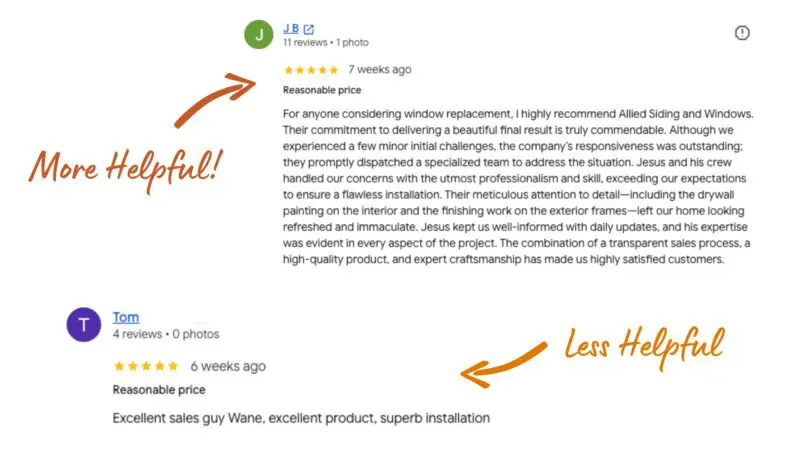
Look for reviews that describe the full experience:
- What happened during the consultation?
- Did the company communicate during the waiting period?
- Did the crew arrive when expected?
- How was the home protected?
- Was the work completed correctly?
- Did the company return to fix problems?
The reviews that make you click “Read more” are often the most useful.
Look At Negative Reviews Too
Every established company will eventually have an unhappy customer.
People make mistakes. Projects encounter complications. Communication can break down.
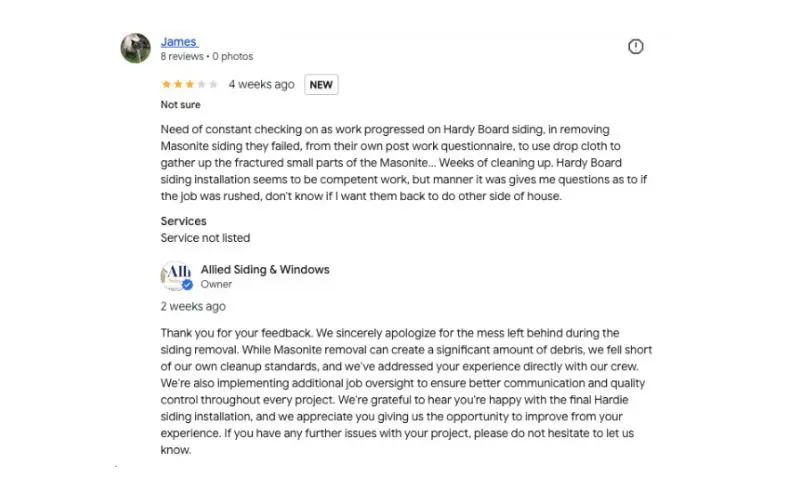
Look for responses that:
- Acknowledge the homeowner’s concern.
- Offer a direct way to contact the company.
- Attempt to explain or resolve the problem.
- Remain professional rather than defensive.
Companies are often judged most accurately by how they handle their bad days.
What Questions Should You Ask Before Hiring a Window Contractor?
A consultation should do more than give you a price.
It should help you understand what you are buying and who will be responsible for delivering it.
Here are some of the most important questions to ask.
| Question | What a useful answer should clarify |
| Who will install my windows? | Whether the crew regularly installs windows and knows the product |
| How long have you worked with this crew? | Whether the relationship is established or arranged job by job |
| How are installers trained? | Whether the company has an actual process |
| Who supervises or inspects the work? | How quality control is handled |
| Who do I call if there is a problem? | Whether the contractor or manufacturer manages service |
| Do you have a dedicated warranty department? | Whether someone is responsible after installation |
| Can you show me proof of insurance? | Whether proper coverage exists |
| Can you explain your installation process? | Whether the company understands and can articulate its work |
The goal is not to interrogate the salesperson.
It is to see whether the company has clear, confident answers to reasonable questions.
Are Subcontractors a Red Flag?
No. This is one of the biggest misconceptions in home improvement.
Many homeowners assume company-employed installers are automatically better than subcontractors. Some contractors even use “We never subcontract” as a major sales point.
But the installer’s employment classification does not determine the quality of the work.
Some highly skilled installers prefer to operate as subcontractors because they can:
- Own and manage their crews.
- Use their own tools.
- Carry their own insurance.
- Work within a structure that benefits their business and family.
- Expand from one crew into several well-managed crews.
Meanwhile, a W-2 employee can still be inexperienced, poorly trained, or new to the company.
The more useful questions are:
- How long has this subcontractor worked with you?
- Do they install for several competing companies?
- Do they follow your installation standards?
- Who is responsible for quality control?
- Who corrects the work if something goes wrong?
A subcontractor who has worked exclusively with the same company for years may offer far more consistency than an employee hired last month.
Do not focus too heavily on whether installers receive a W-2 or 1099. Focus on the relationship, expectations, training, accountability, and quality of the work.
Should a Qualified Contractor Explain the Installation Process?
Yes and not with a vague promise that “our guys do great work.”
A qualified contractor should be able to explain the installation process in considerable detail.
That includes:
- How the window opening is measured
- How much tolerance is left around the new window
- How the unit is secured
- How gaps are insulated
- How the exterior is sealed
- How water is directed away from the opening
- How interior and exterior trim are finished
- What happens if rotten or damaged wood is discovered
- How the window is tested before the crew leaves
You do not need to become a window installer yourself.
But you should hear enough detail to understand that the company has a process.
Homeowners often say they do not want to sit through a contractor’s presentation. No one wants to be trapped in a three-hour sales pitch, but refusing to hear any explanation can work against you.
You should want the contractor to explain:
- The product
- The installation
- The warranty
- The company
- The service process
The problem is not the presentation itself.
The problem is when the presentation is designed to pressure you instead of educate you.
What Installation Details Should You Listen For?
Replacement window openings are rarely perfect squares.
There will often be small gaps between the new window and the existing opening. What the installer does with those gaps can affect comfort, efficiency, moisture control, and pest resistance.
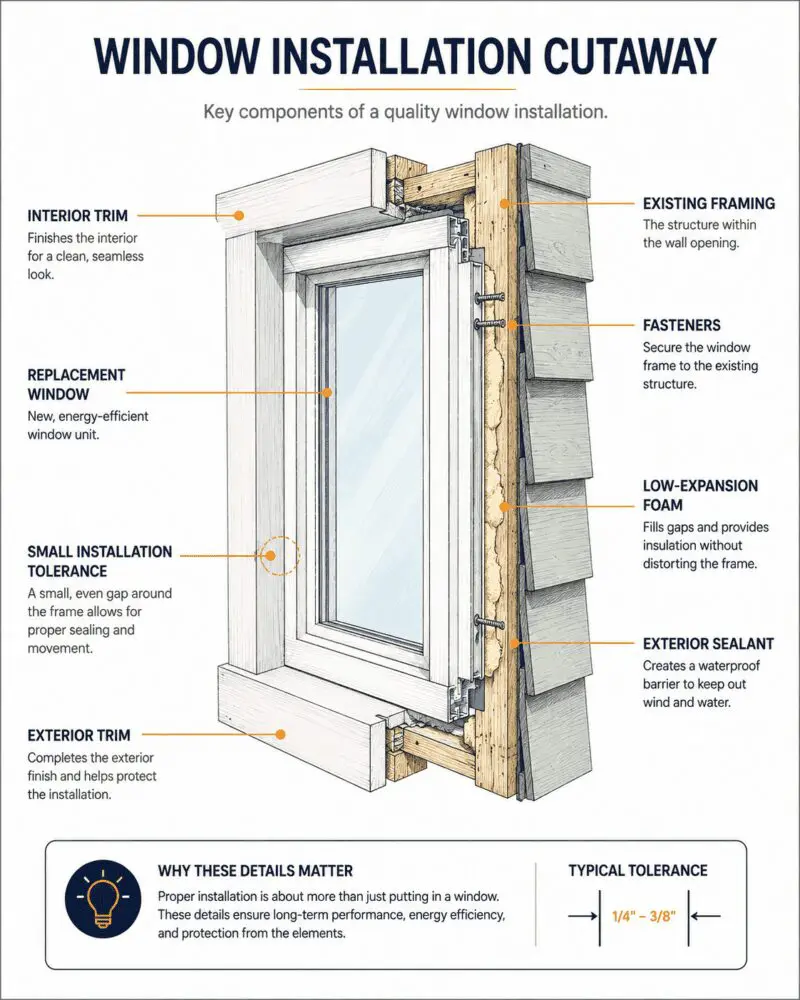
Listen for details such as:
How Will the Window Be Secured?
Ask what type of fasteners will be used and why.
The contractor should be able to explain how the window is anchored without damaging or distorting the frame.
How Will Gaps Be Insulated?
Installing trim over a gap does not make the gap disappear.
Ask whether the crew uses an appropriate low-expansion foam or another approved insulating material around the frame.
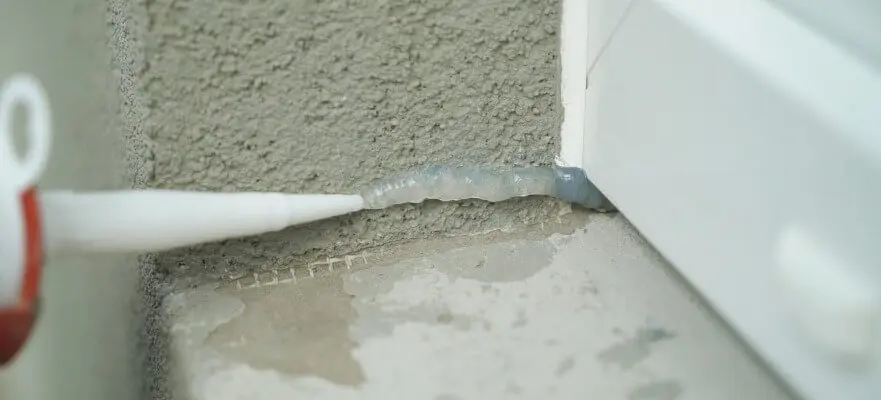
How Will the Exterior Be Sealed?
The contractor should explain how it prevents water from entering around the opening.
A bead of visible caulk may be part of the process, but it should not be the entire waterproofing strategy.
What Happens if Damage Is Found?
Rotten wood, damaged framing, or deterioration around the opening may not be visible until the old window is removed.
Ask:
- Who decides how the damage will be repaired?
- Is minor repair included?
- What could cause an additional charge?
- Will work stop until you approve the repair?
A qualified contractor should not promise that hidden damage is impossible.
It should explain how hidden damage will be handled if discovered.
How Important Are Window Warranties?
Most replacement window projects involve at least two different warranties:
| Warranty | What it generally covers |
| Manufacturer warranty | Defects in the window, glass, frame, hardware, or other product components |
| Workmanship warranty | Problems related to the contractor’s installation |
The distinction matters because manufacturers commonly exclude damage or failure caused by improper installation.
When something goes wrong, you do not want to be stuck between the manufacturer and contractor while each claims the other is responsible.
Ask the contractor:
- Will you handle the manufacturer claim for me?
- Who pays the labor to remove and replace a defective part?
- What happens if the manufacturer denies the claim?
- Does your workmanship warranty cover leaks or installation-related issues?
- Do you have a service department?
A product-only warranty may provide a replacement window sash or piece of glass while leaving you responsible for the labor required to install it.
That can turn a “covered” claim into an unexpected bill.
What Makes a Window Warranty Actually Good?
Do not stop at the word “lifetime.” Read what the warranty actually covers.
Important provisions may include:
- Insulated glass seal failure
- Hardware failure
- Frame or sash defects
- Accidental glass breakage
- Labor
- Transferability
- Workmanship
- Exclusions related to installation or maintenance
Pay particular attention to how “lifetime” is defined.
It could mean:
- As long as you own the home
- The expected lifetime of the product
- A defined number of years
- As long as the original purchaser occupies the home
A transferable warranty may also be valuable if you plan to sell. Being able to tell a future buyer that the windows still have coverage can become a useful selling point.
| Warranty structure | Product covered | Labor covered | Installation defects | Claim handled by |
| Product-only | Yes | No | No | Homeowner/manufacturer |
| Product + limited labor | Yes | Limited | Separate | Contractor |
| Product + workmanship service | Yes | Defined | Yes | Contractor |
A good warranty should answer your questions clearly.
If the warranty creates more questions than it answers, keep reading or ask the company to walk you through it.
Does a Higher Price Mean a Contractor Is More Qualified?
Not automatically.
An expensive company can still make mistakes. A lower-priced company can still perform quality work.
However, price often reflects more than the window itself.
A larger or more established company may charge more because it maintains:
- A production department
- Customer service staff
- Dedicated warranty personnel
- Project managers
- Training and quality-control systems
- Office locations
- Insurance coverage
- Long-term service infrastructure
You are paying for those employees and systems.
That does not mean every homeowner needs the most expensive experience available. Some people value a highly managed process with frequent updates. Others are comfortable with a smaller contractor and fewer touchpoints.
But extremely low prices can make it difficult for a company to fund the people and systems needed to communicate, inspect projects, and provide long-term service.
Sometimes you are not paying more for a dramatically different window. You are paying for the company to still answer the phone when you need help.
Can a Contractor Be Too Large or Too Specialized for Your Project?
A contractor may be qualified but still not be the right fit.
For example, some companies have minimum project sizes and will not replace a single window.
That is not necessarily because one-window projects are unimportant. A quality installer still has to travel to the home, set up, complete the work, and devote most of a day to the project.
Because of that, replacing one window may cost more per opening than replacing five or ten at once.
The important thing is transparency.
A company should tell you:
- Whether it accepts small projects
- Whether a minimum charge applies
- Why the cost per window changes with project size
- Whether a smaller local contractor may be more practical
Being qualified does not mean being right for every homeowner.
What Are the Biggest Red Flags That a Window Contractor May Not Be Qualified?
No single red flag proves a company will do bad work.
But several warning signs together should make you more cautious.
Watch for contractors that:
- Cannot explain who will install the windows.
- Treat windows as an occasional side service.
- Have many reviews but almost none about windows.
- Cannot describe their installation process.
- Rely heavily on vague “certified installer” claims.
- Refuse to provide proof of insurance.
- Push all warranty responsibility onto the manufacturer.
- Do not have a clear service process.
- Cannot explain how installers are trained.
- Avoid questions about how long they have offered windows
- Provide a warranty that is not available for you to review
- Offer a price dramatically below every established competitor without explaining why
The biggest red flag may simply be vagueness.
A qualified contractor should be able to explain what it does, how it does it, and who is responsible if something goes wrong.
How Can You Quickly Vet a Window Contractor?
Before scheduling an appointment (or certainly before signing a contract), work through this checklist.
Window Contractor Qualification Checklist
- Does the company have a real local presence?
- How long has it specifically installed windows?
- Does it have a dedicated window division?
- Do its reviews mention window projects?
- Can it provide proof of insurance?
- Can it explain how installers are trained?
- Does it have an established relationship with its crews?
- Can it walk you through the installation process?
- Does it provide both product and workmanship warranty information?
- Is the written warranty available to review?
- Does it handle service and warranty claims?
- Does its proposal clearly describe the product and installation?
You may not get a perfect answer to every question.
The purpose is not to find a flawless contractor. It is to find a company that is transparent, experienced in the work you need, and accountable for the result.
How Can You Confidently Choose a Qualified Window Contractor?
Choosing a window contractor can feel difficult because there is no single license, certification, review score, or number of years in business that guarantees quality.
You now know what matters more: window-specific experience, proper insurance, trained and accountable installers, a repeatable installation process, clear warranty coverage, and a reliable plan for service after the project is complete. A qualified contractor should be able to explain each of these areas clearly and provide evidence to support its claims.
Before signing a contract, ask who will install your windows, how the work will be completed, what happens if hidden damage is discovered, and who will help you if there is a problem later. The biggest red flag is often not one bad answer, but a pattern of vague ones.
Your next step is to compare more than the final price. Read “What Should Be Included in a Window Replacement Quote?” to understand how product quality, installation methods, warranties, and service models can affect what you pay.
At Allied Exteriors, we believe homeowners should understand exactly what they are buying before making a decision. Whether you choose Allied or another contractor, use the questions in this article to find a company that is transparent, experienced, and accountable for the work.
Frequently Asked Questions About Vetting Texas Window Contractors
Do window installers need a license in every Texas city?
No. Texas does not require a statewide license specifically for window installers, but some cities may require local contractor registration. Always check with your city’s permitting department.
Should a window contractor pull a permit?
It depends on the city and project scope. A like-for-like window replacement may not require one, but enlarging an opening, changing egress, or working in a historic district often does. Your contractor should verify local requirements.
How can I verify a contractor’s insurance?
Ask for a current certificate of insurance and confirm the policy directly with the listed insurance provider. Check the business name, coverage type, limits, and expiration date.
Should a contractor provide references?
Yes, although references are usually hand-selected and may not show the full picture. Use them alongside detailed, window-specific online reviews.
Can I inspect a previous window installation?
You can ask, but access depends on the previous homeowner’s permission. A good alternative is to request detailed photos of recent projects, including close-ups of the installation and finished trim.
How long should a workmanship warranty last?
There is no required length in Texas. Focus less on the number of years and more on what is covered, including leaks, air infiltration, sealing, fastening, trim, and labor.
Allied Exteriors Blog
Whether you’re comparing replacement windows, researching siding materials, or trying to understand project costs, our Learning Center is built to help you make informed decisions before talking with a contractor.