
Is Allied Exteriors the Right Siding Company for Your Texas Home?
By Shane Creel | Sep. 29, 2026 | 13 min. read
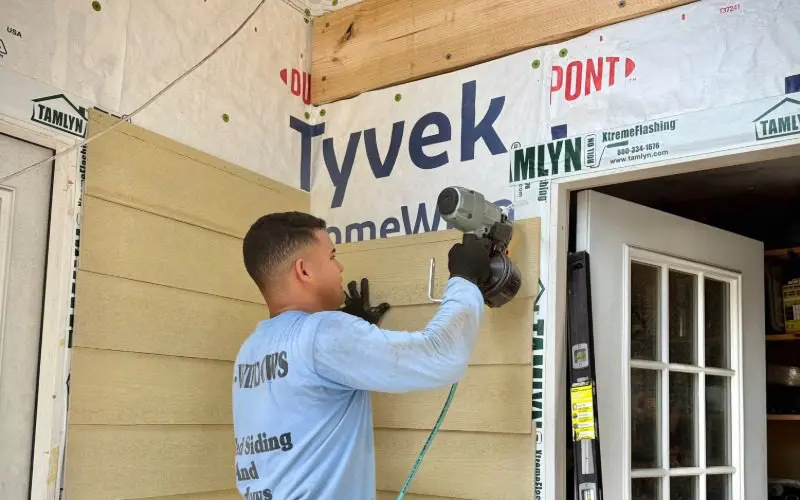
Replacing your siding is a major investment, and choosing the right contractor can be just as important as choosing the siding itself.
If you’ve started comparing siding companies, you’ve probably noticed that nearly every contractor promises quality workmanship, great service, and a fair price. So how do you determine which company is actually the right fit for your home? And just as importantly, how do you recognize when a contractor isn’t the right fit for you?
Before we answer that, there’s an important disclaimer: We are Allied Exteriors, so we’re naturally biased when talking about our own company. Our goal in this article isn’t to convince you that we’re the best siding company for every Texas homeowner. In fact, there are projects and homeowners we’re simply not the right fit for.
Allied Exteriors has been replacing siding since 1988, serving homeowners in Houston, Dallas-Fort Worth, and Austin. We exclusively install James Hardie fiber cement siding and have earned James Hardie’s President’s Club award five times. For this article, we also interviewed Shane Creel, Allied Exteriors’ Sales Manager and former sales consultant, who has firsthand experience helping homeowners determine whether Allied is the right contractor for their project.
The truth is that the best siding company for you depends on your project, budget, priorities, and expectations.
In this article, we’ll explain the projects Allied is best equipped to handle, the homeowners who tend to be the best fit for our process, the situations where you may be better served by another contractor, and the questions you should ask before hiring any siding company.
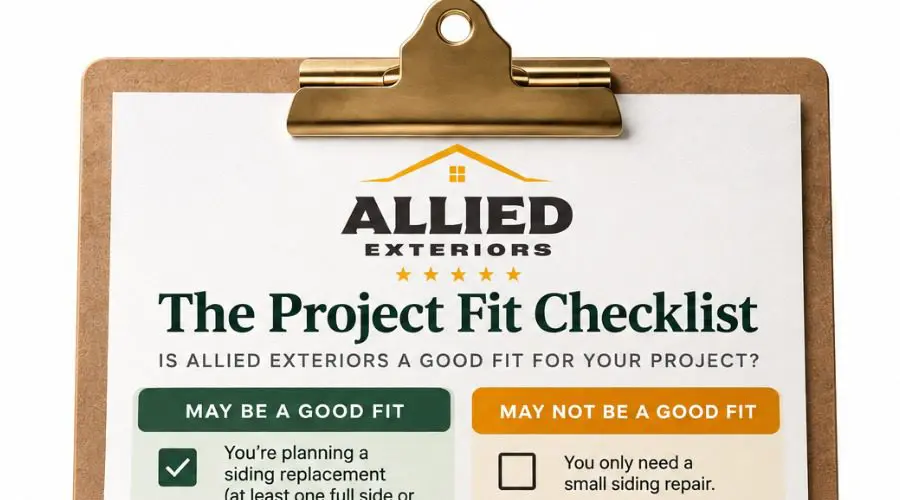
Executive Summary: Allied may be a good fit if your project includes replacing the siding on at least one complete side of your home and value education, communication, and detailed installation. Allied may not be a good fit if you only need a small repair, need mobile home siding replacement, or are choosing solely on lowest price.
Who Is Allied Exteriors Not the Right Siding Contractor For?
It may seem unusual for a contractor to start by talking about who they aren’t the right fit for. But we believe it’s one of the most helpful conversations you can have before requesting an estimate.
And rather than trying to be everything to everyone, we’d rather be transparent about the projects and homeowners we’re best equipped to serve. If we aren’t the right fit, we’d rather you know that before investing your time in a consultation.
Before we explain what we do well, it may be more helpful to start with where we may not be the best choice.
You’re looking for the absolute lowest price.
If your only goal is to find the cheapest quote, we’re probably not the contractor you’re looking for.
Our projects follow workmanship requirements needed to exceed James Hardie’s installation guidelines. This includes but is not limited to flashing, fasteners, and proper moisture management to ensure a long performing project. Those materials and experienced installers cost more than cutting corners.
That doesn’t mean we’re the most expensive option, but we’re rarely the least expensive and most often fall in the middle of the road when comparing other Hardie siding quotes.
In our experience comparing siding estimates with homeowners, the lowest bid is often lower because the scope is different, not simply because the contractor charges less. We frequently see differences in flashing, fasteners, sheathing preparation, framing allowances, painting, and other installation details that affect how the siding performs after the project is complete.
Allied includes these items because our goal is to install the system according to James Hardie’s requirements, even when that means our quote is higher than a contractor using a more minimal installation approach.
You only need a small siding repair.
We generally focus on siding replacement projects of approximately 500 square feet or more, or one full side of a home.
If you only have a single damaged board or a very small repair, a local handyman or repair contractor may be the better fit for your needs. For existing customers, Allied’s warranty provides lifetime workmanship coverage on defective installation for as long as you live in your home.
You only want the fastest, simplest solution.
Some homeowners simply want new siding installed with as little discussion as possible.
Our consultations tend to be educational.
We spend time explaining installation details, moisture management, warranties, and why different installation methods affect long-term performance.
If you’d rather skip those conversations entirely, another contractor may better match your expectations.
Knowing when we’re not the right fit helps clarify the other side of the equation. Our team is built for larger siding replacement projects where installation details, preparation, and the ability to address unexpected conditions become especially important.
You specifically want vinyl or engineered wood siding for your home.
Allied Exteriors exclusively installs James Hardie fiber cement siding, so if you already know you want vinyl, engineered wood, or another siding material, we probably aren’t the right contractor for your project.
That doesn’t mean those materials are automatically wrong for every homeowner. It simply means our siding team is built around one product system. By specializing in James Hardie, our crews can focus on its specific installation requirements, flashing details, fastening methods, and long-term performance expectations.
If you’re still deciding between materials, it may make sense to compare your options first. But if you’ve already decided that vinyl or engineered wood is the best fit for your home, you’ll be better served by a contractor that regularly installs that product.
What Types of Siding Projects Does Allied Exteriors Handle?
Not every siding project requires the same level of experience.
Replacing a few damaged boards on a detached shed is very different from removing decades-old siding from an entire home, uncovering hidden water damage, and rebuilding portions of the wall before installing new siding.
Because of that, many contractors naturally gravitate toward certain types of projects. Some primarily perform repairs, while others specialize in complete exterior renovations.
Our team is built around larger replacement projects where proper planning, installation, and craftsmanship have the biggest impact on the long-term performance of the home.
That typically includes projects such as:
- Full-home siding replacement
- Partial siding replacement on larger elevations
- Two-story homes
- Detached garages
- Homes with extensive deterioration
- Homes requiring structural repairs discovered during demolition
One reason we focus on these projects is that you never truly know what’s behind the existing siding until demolition begins. Hidden deterioration is common, and having a team that’s prepared to address it can make the difference between a repair that lasts and one that simply covers up the problem.
| Good Fit | Probably Not the Best Fit |
| Full siding replacement | One or two damaged boards |
| Large partial replacement | Small cosmetic repairs |
| Rot or framing repairs | DIY repair projects |
| Homes needing moisture correction | Temporary fixes |
That’s particularly important on Texas homes where years of heat, rain, humidity, and previous repairs can leave conditions behind the siding that aren’t obvious during an initial walkthrough. In Houston, our team often sees moisture-related deterioration can be a particular concern, while homes throughout Dallas-Fort Worth and Austin can have their own histories of weather exposure and previous exterior repairs.
But project size is only part of determining whether we’re a good fit. How you want your siding project handled and what you value when choosing a contractor matters just as much.
Who Is Allied Exteriors the Best Fit For?
We’ve found that the homeowners who are happiest with their finished project often have something in common.
It isn’t necessarily the size of their home, their budget, or even the type of siding they choose.
Instead, it’s what they value during the buying process.
Some homeowners simply want the fastest installation or the lowest price. Others want to understand exactly what’s being installed, why certain details matter, and how today’s decisions will affect their home years down the road.
If you tend to fall into the second group, there’s a good chance we’ll be a good fit.
You’re looking for value, not simply the lowest bid.
There’s an important difference between cheap and good value.
Our goal is to deliver a project that’s installed correctly using the proper materials at a fair price, not necessarily the lowest price available.
You want to understand what’s being installed.
Many homeowners tell us they appreciate how much time we spend explaining the project before any work begins.
We believe an informed homeowner makes better decisions.
That means discussing flashing details, moisture protection, warranties, installation methods, and why they matter and not just presenting a price.
You appreciate communication throughout the project.
No two homeowners want the exact same level of communication.
Some prefer frequent updates. Others simply want advance notice before work begins.
Our production team works to keep homeowners informed before installation starts and remains available throughout the project if questions arise.
If those priorities sound familiar, the next question is what they actually look like during a siding project. Many of the differences between contractors aren’t obvious from the finished siding alone; they’re found in how the project is planned, explained, and installed.
How Does Allied Exteriors Compare to Other Siding Contractors?
Many siding proposals can look similar at first glance. They may list the same James Hardie product, similar colors, and a warranty. But that doesn’t necessarily mean the contractors are proposing the same installation.
In our consultations, one of the biggest differences we see between siding estimates is how much of the installation scope is actually spelled out and included in the price.
Lower-cost proposals may not clearly specify details such as:
- What flashing will be installed and where
- What type of fasteners will be used
- Whether the proper starter strips are included
- What nailing pattern the crew will follow
- How sheathing or damaged framing will be handled
- Whether painting is included
- Who will actually be installing the siding
Those details matter because James Hardie has specific installation requirements involving fastening, flashing, clearances, and other parts of the wall system. A contractor can install James Hardie material on your home without necessarily installing it in the same way another James Hardie contractor would. Shane noted that he has seen lower bids where contractors save money by omitting some of these materials or installation steps.
Before you start collecting siding quotes, read our guide on What Should Be Included in a Replacement Siding Quote so you can be prepared before a contractor steps into your home.
What Questions Should You Ask Before Hiring a Siding Contractor?
Regardless of who you hire, ask questions that reveal how the contractor actually installs siding, not just what products they sell.
Some of the most valuable questions include:
| Ask This Question | Why It Matters |
| Do you follow James Hardie’s installation guidelines? | Proper installation affects warranty and longevity. |
| What happens if hidden damage is discovered? | Rot and framing issues are common once siding is removed. |
| Is painting included? | Not every proposal includes finishing work. |
| Who performs the installation? | Experienced siding crews matter. |
| How long does installation typically take? | Helps set realistic expectations. |
Several of these were emphasized during our interview with Shane, particularly asking about James Hardie installation practices and understanding exactly what is included in the proposal.
The answers to those questions can help once you’re sitting across from a contractor, but first, you have to decide which companies are worth inviting to your home. A little research before scheduling estimates can make that list much easier to narrow down.
How Do You Choose the Right Siding Contractor?
If you’re comparing several contractors, Shane recommends starting with manufacturers you trust.
For James Hardie projects, look for contractors listed as James Hardie Elite Preferred Contractors.
From there, compare:
- Number of customer reviews
- Quality of reviews
- How long the company has been completing siding projects
- Whether siding is one of their primary services or simply an occasional offering
Some companies primarily install roofing or windows and only take on siding projects occasionally. That’s worth asking about during your consultation.
Once you’ve looked at experience, reviews, installation practices, and the way each company approaches the project, price becomes just one part of the decision. The final question is whether the contractor’s strengths line up with what matters most to you.
Is Allied Exteriors the Right Siding Contractor for Your Home?
Choosing a siding contractor isn’t about finding a company that claims to be the best for everyone. It’s about finding the company whose experience, process, and priorities line up with what matters most to you.
If you’re looking for the absolute lowest price, only need a very small repair, or want the fastest possible installation with minimal discussion, Allied Exteriors may not be the right fit for your project.
But if you’re planning a larger siding replacement, value clear communication, want to understand how your siding will be installed, and care about long-term performance as much as upfront price, there’s a good chance our approach will align with what you’re looking for.
Since 1988, Allied Exteriors has helped homeowners across Houston, Dallas-Fort Worth, and Austin replace their siding with James Hardie fiber cement siding. Our goal isn’t to convince every homeowner to hire us. It’s to help you understand your options, what your project actually requires, and whether we’re the right company to help you move forward.
If what you’ve read in this article sounds like the kind of siding experience you’re looking for, your next step is to schedule an honest estimate with our team. We’ll take a look at your home, talk through your priorities, explain what we recommend and why, and help you determine whether Allied Exteriors is the right fit for your project.
FAQS
How much does an Allied Exteriors siding project cost?
Most Texas homeowners can expect to invest between $25,000 and $50,000+ for a James Hardie® fiber cement siding replacement with Allied Exteriors. The final cost depends on your home’s size, the products you choose, and the amount of preparation your home needs. Learn more about siding costs on our Fiber Cement Siding Pricing Page.
Does Allied Exteriors do siding repairs?
Allied Exteriors generally does not perform small, repair-only siding projects, such as replacing one or two damaged boards. Our siding crews are set up primarily for larger replacement projects. If you only need a minor repair and aren’t ready for a larger replacement, a qualified handyman or siding repair contractor may be a more practical and cost-effective option.
What areas of Texas does Allied Exteriors serve?
Allied Exteriors serves homeowners throughout the Houston, Dallas-Fort Worth, and Austin areas. Because conditions vary across these Texas markets, from Houston’s higher humidity to the heat and weather exposure experienced throughout Central and North Texas, we consider the conditions your siding will face when planning your project.
Does Allied install siding other than James Hardie?
No. Allied Exteriors exclusively installs James Hardie fiber cement siding. That specialization allows our team to focus its siding experience around one system and the manufacturer’s recommended installation practices.
If you’re specifically looking for vinyl, engineered wood, or another siding material, Allied likely won’t be the right contractor for your project.
How large does my siding project need to be?
As a general guideline, Allied typically takes on siding projects of about 500 square feet or more. That doesn’t necessarily mean you need to replace the siding on your entire home. For example, siding on the upper portion of a two-story home or a detached garage may provide enough square footage for a project.
If you only need a few boards replaced, a handyman or siding repair specialist will likely be a better fit.
Allied Exteriors Blog
Whether you’re comparing replacement windows, researching siding materials, or trying to understand project costs, our Learning Center is built to help you make informed decisions before talking with a contractor.